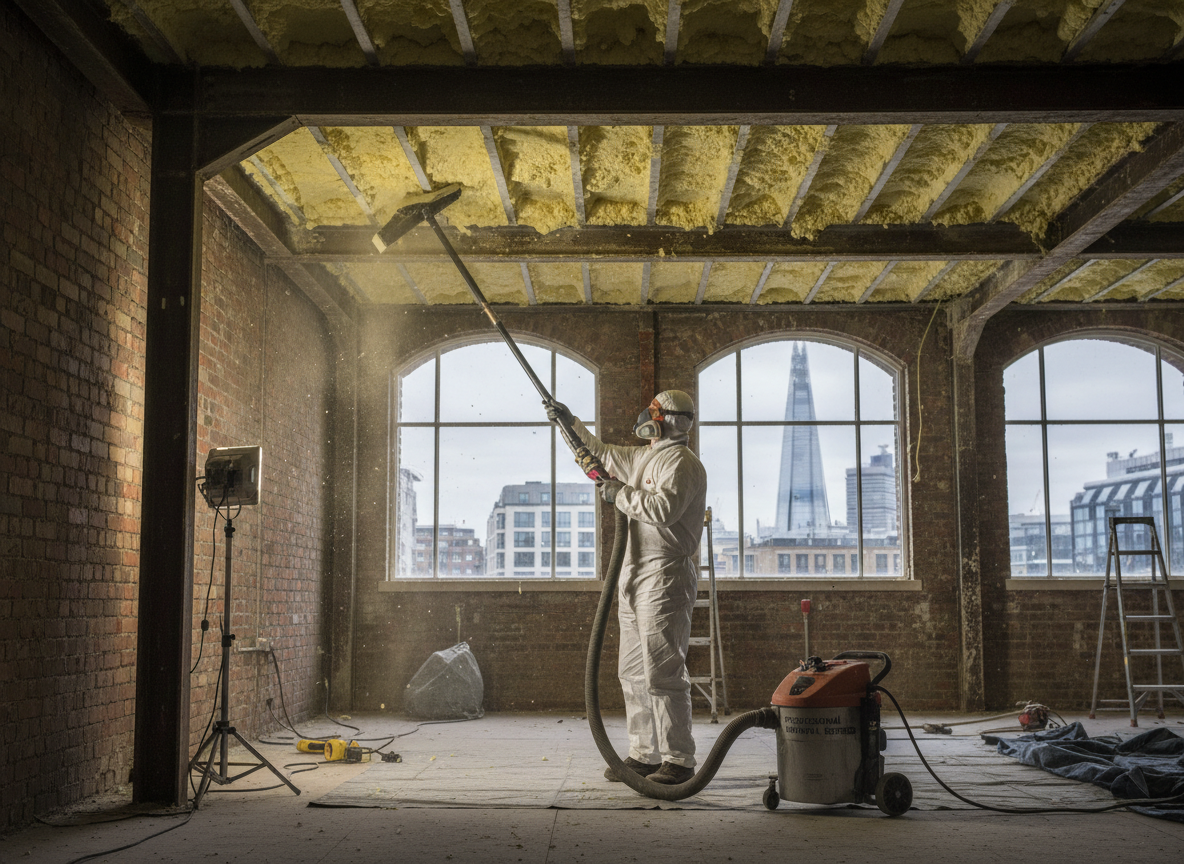
Commercial properties in London often feature spray foam applied decades ago in warehouses and office conversions around Kensington and the City fringes. Removing it requires isolating HVAC systems and managing dust in multi-tenant buildings where tenants remain operational. Older brick and timber structures common in the area demand careful cutting to avoid damaging original joists or introducing moisture pathways that later cause damp.
London's variable weather, with frequent rain and high humidity, affects removal timing because open roof sections must be weatherproofed daily. Crews work around listed-building constraints and party-wall agreements that frequently apply in central boroughs. Waste must be segregated for licensed disposal sites outside the congestion zone, adding logistics steps not required on residential jobs.
Edge cases include foam bonded to asbestos-containing soffits or integrated with flat-roof membranes installed in the 1980s. Technicians test surfaces first and coordinate with building-control officers when structural insulation removal affects fire compartments. Night or weekend shifts are common to minimise disruption to trading hours in retail units.
Technician insight
In London, the thing that catches most people out with Commercial Spray Foam Removal is how Victorian and Edwardian warehouses in Kensington and nearby boroughs often have foam bonded directly to original timber or hidden behind later plasterboard; once you open it up you find the real extent and the job doubles.
Kensington Office Conversion Removal
A converted warehouse office near Kensington High Street had spray foam failing on the underside of the roof deck. Inspection showed it had trapped moisture against the original brickwork. We isolated the top floor, removed the foam over two nights, disposed of the waste and left the space dry and ready for new insulation.
How it works
- 1
Site Survey And Risk Assessment
Measure foam depth and extent, check for hidden services and confirm building regulations compliance before work begins.
- 2
Containment And Ventilation Setup
Install negative-pressure zones and dust barriers to protect occupied commercial spaces and adjacent units.
- 3
Mechanical Removal
Use specialist cutting and scraping tools to extract foam without damaging substrate or releasing fibres into the workspace.
- 4
Debris Clearance And Disposal
Bag and remove all waste to licensed facilities, followed by HEPA vacuuming and surface cleaning.
- 5
Final Verification
Conduct visual and moisture checks, then provide documentation for building managers and insurers.
Pricing
Commercial jobs priced after inspection due to scale, access and disposal variables; 24/7 quotes available from our Kensington base.