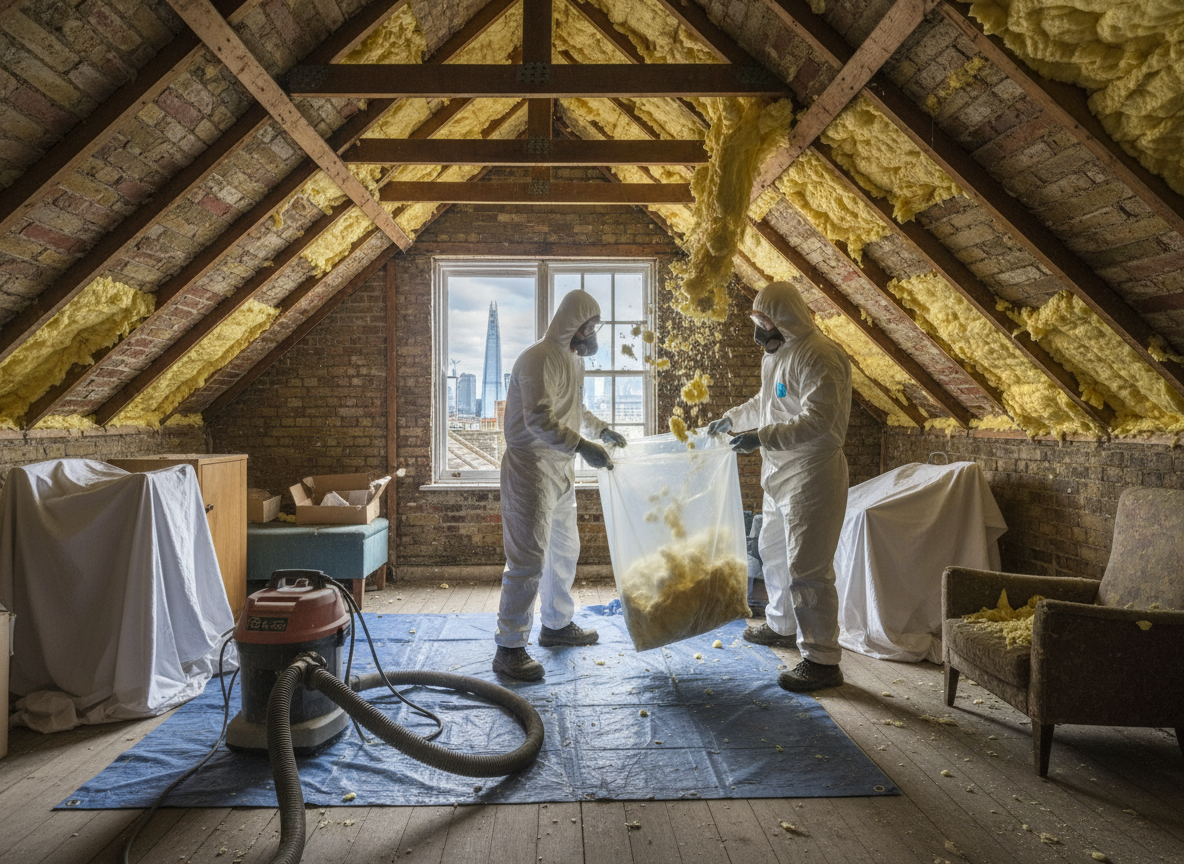
London's older housing stock, particularly Victorian and Edwardian terraces in Kensington and surrounding boroughs, often received spray foam insulation in cavity walls during later retrofits. These installations can trap moisture against brickwork that was never designed to be sealed, leading to timber decay and reduced breathability in solid-wall conversions common throughout the capital. Removal requires careful sectioning of the foam to avoid damaging original lath and plaster or exposing hidden wiring runs typical in pre-1930s builds.
Weather patterns in the London area add complexity, as persistent damp winters increase the risk of mould regrowth once foam is disturbed. Technicians must contain dust and debris on-site because narrow mews and shared party walls in areas like Notting Hill and Chelsea mean any airborne particles can affect neighbouring properties. Proper negative-air setups and phased extraction prevent cross-contamination that simpler rural jobs rarely encounter.
UK building regulations on insulation removal emphasise ventilation restoration after foam extraction, especially where original chimneys or air bricks have been covered. In Greater London, crews routinely check for asbestos in older underfloor insulation layers before starting work, a step driven by the prevalence of mid-century additions in many terraces. Disposal must follow local waste rules for expanding foams that cannot be landfilled as general construction waste.
Technician insight
In London, the thing that catches most people out with Residential Spray Foam Removal is how Victorian terraces in Kensington and Chelsea often have foam injected right up against shared party walls, so any removal work has to stop short of disturbing the neighbour's side or you'll create new damp paths that weren't there before.
Cavity Foam Removal in Kensington Terrace
Owner of a 1890s terrace noticed persistent damp along one external wall. Inspection revealed spray foam blocking original air bricks. We extracted the foam in sections, cleared the vents, and restored airflow. The wall dried out without further intervention.
How it works
- 1
Initial Assessment
Inspect the property to map foam locations, check for hidden moisture, and identify access points typical in London terraces.
- 2
Site Preparation
Install containment barriers and negative air pressure to protect adjacent rooms and neighbouring homes.
- 3
Foam Extraction
Cut and remove foam in controlled sections while preserving original wall structures and ventilation paths.
- 4
Cleanup and Restoration
Clear debris, restore airflow where needed, and dispose of materials according to London waste guidelines.
Pricing
Upfront quotes provided after on-site inspection; cost depends on property age, foam depth, and access constraints common in London terraces.