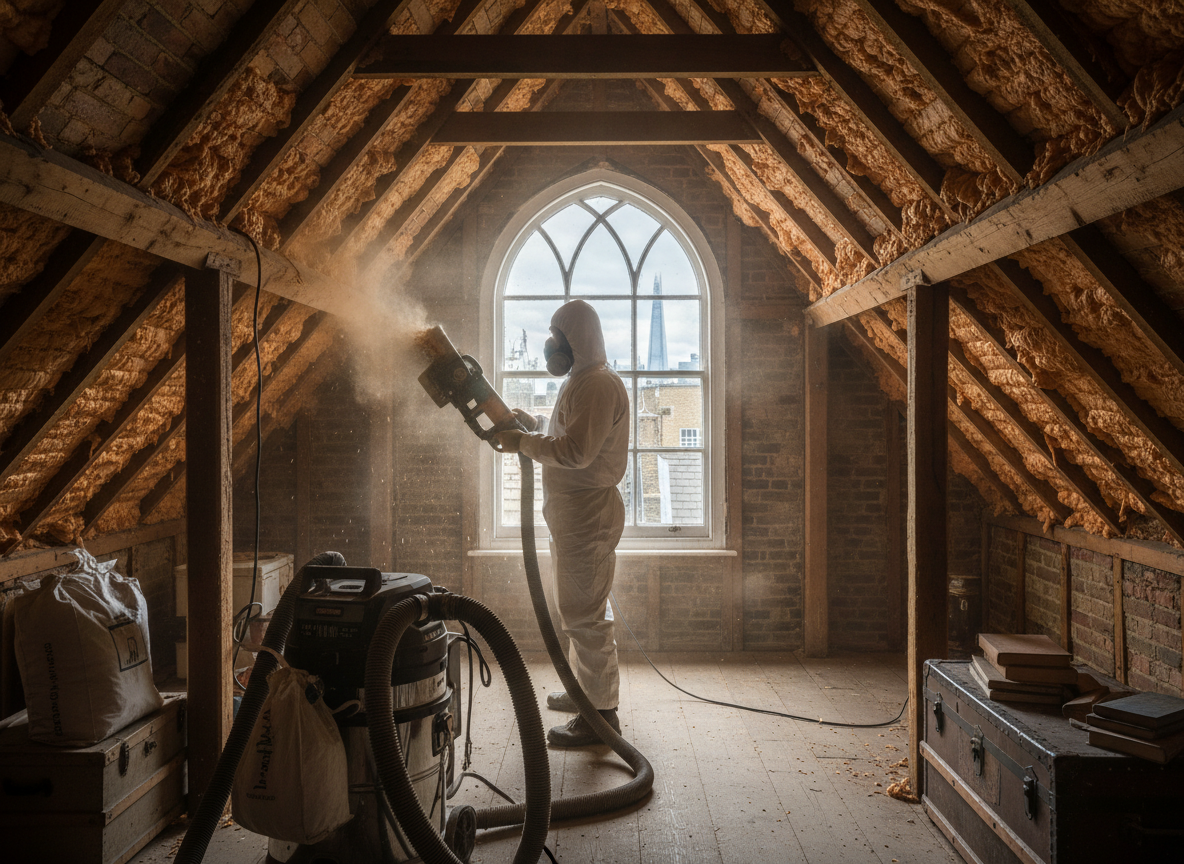
London's Victorian terraces and Edwardian semis often received spray foam insulation in lofts during the 2000s to meet energy targets. Over time the closed-cell material traps moisture against original timber rafters and slate roofs, leading to rot and reduced airflow. Same day removal requires cutting through the foam while protecting lath and plaster ceilings below, then restoring ventilation paths that the original installers had blocked. Crews working from our Kensington High Street base know the narrow access hatches and shared chimney stacks common in W8 and surrounding postcodes.
Edge cases appear regularly in properties near the Thames where higher humidity accelerates timber decay once foam is disturbed. We isolate the work area with dust sheeting and negative air machines because disturbing the foam releases isocyanates and glass fibres. After removal we inspect for hidden damp on the underside of the roof deck before recommending breathable insulation alternatives that comply with current building regulations for listed or conservation-area homes.
Homeowners in areas like Notting Hill and Chelsea frequently discover the foam was applied over existing mineral wool, creating layered problems that cannot be left in place. Same day service means we arrive with the correct solvent-free stripping agents and industrial vacuums so the loft can be cleared and ventilated before nightfall, avoiding overnight condensation buildup on exposed timbers.
Weather patterns in London matter: a sudden downpour during removal can drive water under loosened foam edges. We check the forecast and stage temporary covers on the roof slope when working on properties with shallow pitches typical of 1930s semis in outer boroughs.
Technician insight
In London, the thing that catches most people out with same day Spray Foam Removal is the hidden damp trapped against original rafters in Victorian terraces around Kensington and Chelsea; once the foam is stripped the timber can look sound until you press a screwdriver in and it sinks straight through because the closed-cell layer stopped any drying for fifteen years.
Kensington Terrace Loft Clearance
A homeowner in W8 called after noticing musty smells in the bedroom below the loft. We found 150 mm of closed-cell foam covering every rafter and blocking the eaves. Same day removal exposed wet timber along the party wall; we stripped the foam, vacuumed the debris and opened the vents before the evening rain arrived.
How it works
- 1
Initial Assessment
We inspect the loft space, measure foam depth and check for timber damage or hidden electrical cables.
- 2
Containment Setup
Dust barriers and negative air units are installed to protect living areas below.
- 3
Foam Removal
Foam is cut and stripped in sections, with debris removed via industrial vacuums.
- 4
Ventilation Restoration
Blocked soffits and ridge vents are cleared and inspected before handover.
- 5
Final Walkthrough
We show the homeowner the cleared space and note any follow-up repairs required.
Pricing
Cost depends on loft size, foam thickness and access difficulty; we provide an upfront quote after inspection.