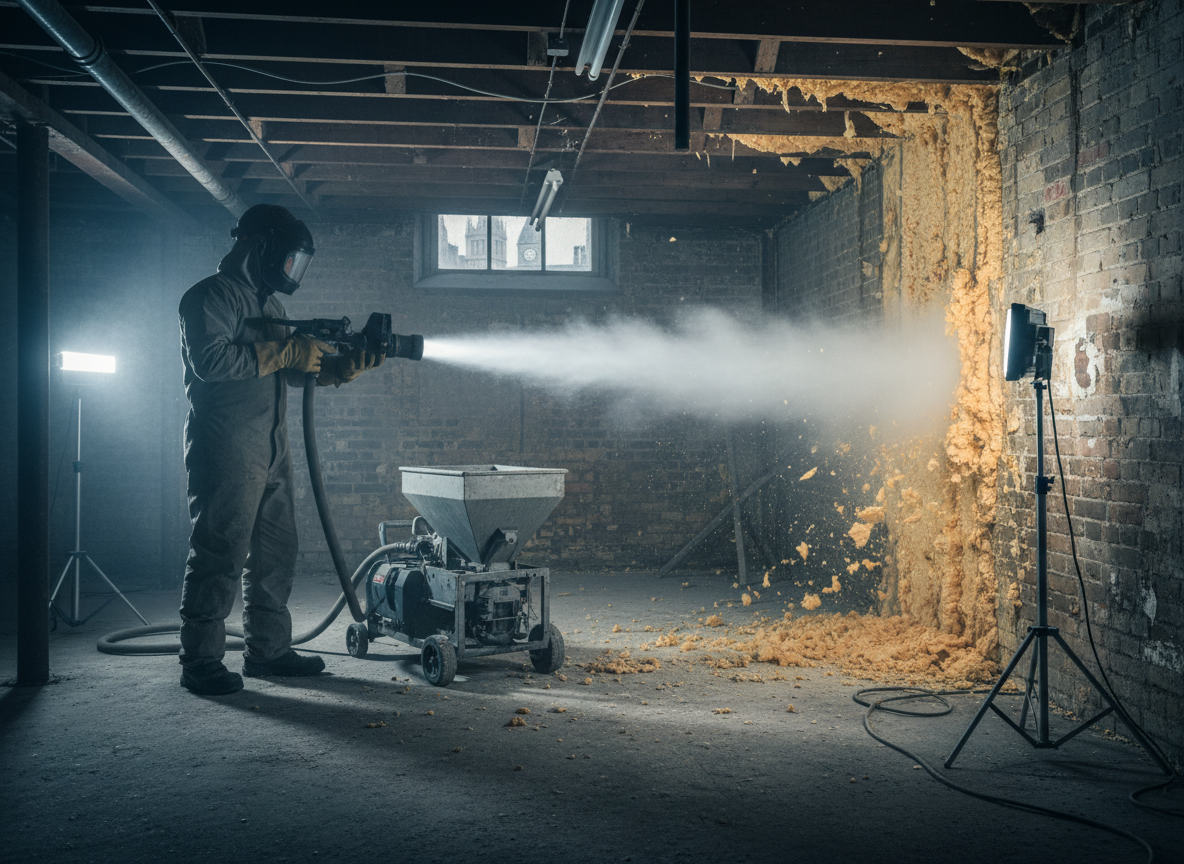
Dry ice blasting removes spray foam by accelerating solid CO2 pellets at high velocity to lift material from timber joists and brickwork common in Kensington and Chelsea terraces. The process avoids water or solvents that could worsen damp issues in older London stock built before cavity wall standards. Operators must monitor pellet feed rates closely because over-aggressive blasting risks eroding lime plaster or exposing rusted fixings in pre-1919 buildings.
Edge cases arise in converted mews houses where foam was applied over original lath and plaster ceilings; the cold embrittlement can cause sections to detach unevenly and drop into voids. Greater London’s frequent high humidity means crews often run dehumidifiers immediately after removal to prevent moisture reabsorption into exposed timber. Building control notifications are sometimes required when work exposes structural elements in listed properties.
Homeowners in areas like Notting Hill frequently discover foam applied over original sash window reveals, creating hidden condensation traps. Dry ice blasting reaches these narrow cavities without dismantling joinery, but requires temporary sealing of vents to contain the CO2 gas. Post-removal inspection with moisture meters confirms substrate dryness before any new insulation is considered.
Technician insight
In London, the thing that catches most people out with dry ice blasting spray foam removal is how often foam was sprayed directly onto original Victorian rafters in Kensington terraces; the cold can make hidden rot obvious only after the foam comes off, and you then have to decide whether to treat timber before any new insulation goes back in.
Kensington Terrace Void Clearance
Foam in a 1890s terrace had trapped moisture against rafters. We found saturated timber once the foam was blasted away. Dry ice blasting cleared the material cleanly without disturbing the original laths. After dehumidification the void dried and the owner could plan repairs without further hidden damage.
How it works
- 1
Site Assessment
Inspect roof voids and wall cavities in the London property to map foam thickness and substrate condition.
- 2
Containment Setup
Seal adjacent rooms and install extraction to manage CO2 levels during blasting.
- 3
Dry Ice Blasting
Apply pellets at controlled pressure to lift foam from joists and masonry without abrasion.
- 4
Debris Removal and Clean
Vacuum residue and wipe surfaces, then run dehumidification to stabilise moisture levels.
- 5
Final Inspection
Check for remaining material and confirm substrate integrity before handover.
Pricing
Pricing depends on access difficulty, foam depth, and property age; site visit required for accurate quote.