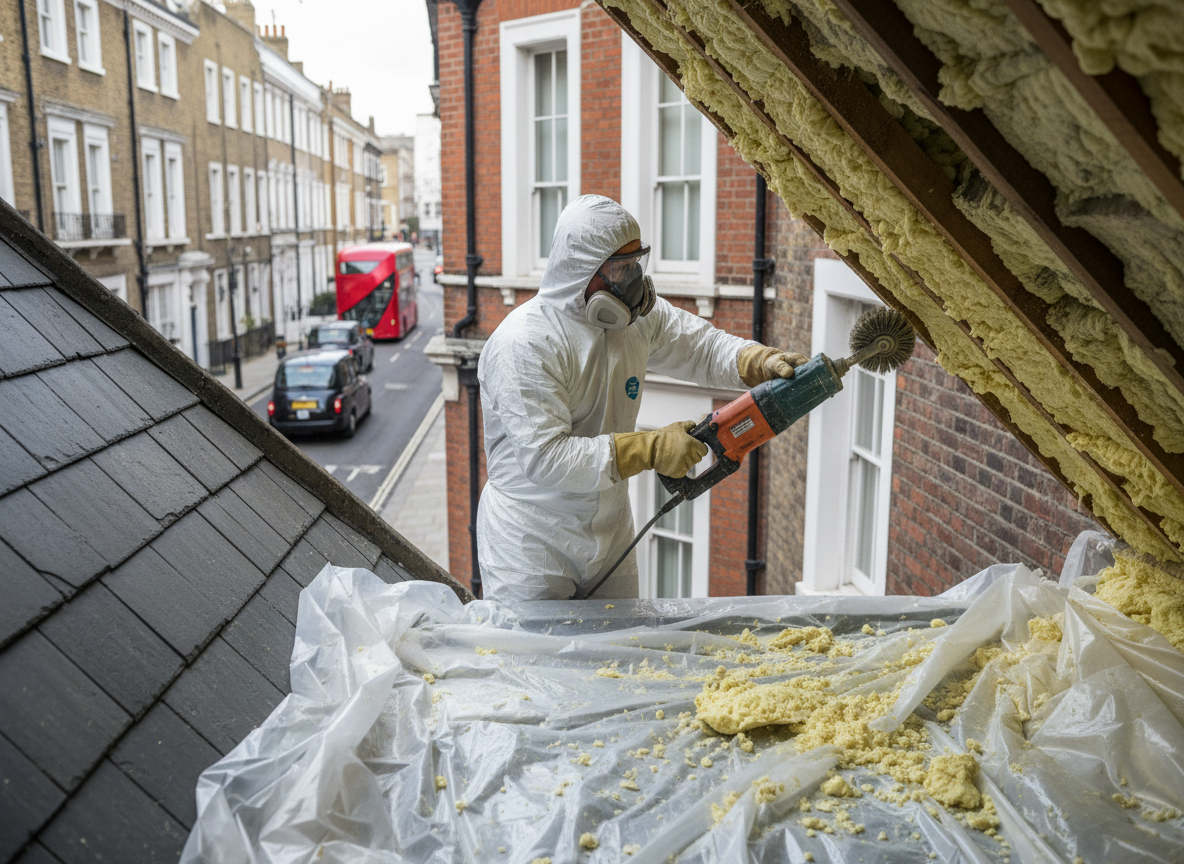
Mortgage lenders in London often flag spray foam insulation in roof voids because it traps moisture against rafters and prevents inspection of original timber. In Kensington and surrounding Victorian terraces, the tight roof spaces and shared party walls mean removal crews must work around limited access hatches and fragile lath-and-plaster ceilings. Failure to remove the foam can delay or block mortgage offers, especially when surveyors note the material during valuation.
Removal begins with careful mechanical scraping and vacuum extraction to avoid disturbing asbestos-containing materials common in pre-1980 London homes. Once cleared, the rafters are left exposed for lender surveyors to inspect for rot or insect damage. Proper disposal follows Environment Agency rules for expanding foam waste, which cannot go into standard skips in central London boroughs.
Weather adds complexity. Persistent damp from the Thames and frequent autumn rainfall means crews must protect internal finishes while working in unventilated lofts. In Edwardian and inter-war properties around West London, foam often bridges to electrical cables and pipework, requiring extra time to trace and isolate services before extraction starts.
Regulatory Notes for London Properties
Lenders typically require photographic evidence of full removal plus a post-works inspection report. Kensington & Chelsea planning rules also restrict noisy works in conservation areas, so 24/7 scheduling helps avoid daytime restrictions near residential streets.
Technician insight
In London, the thing that catches most people out with mortgage lender spray foam removal is the age of Kensington terraces where narrow roof voids and shared chimney stacks leave almost no room to work once the foam has expanded around every joist.
Kensington Terrace Mortgage Hold
A 1890s terrace in Kensington failed its mortgage valuation because spray foam covered the rafters. We found the foam also bridged to original lead flashing. Removal took two nights to avoid daytime noise restrictions, after which the surveyor signed off and the mortgage proceeded.
How it works
- 1
Initial Survey and Lender Requirement Check
Review mortgage surveyor notes and inspect loft access, foam depth, and any hidden services in the Kensington property.
- 2
Safe Mechanical Removal
Scrape and vacuum foam from rafters while protecting ceilings and wiring, working around tight Victorian roof voids.
- 3
Waste Segregation and Disposal
Bag and remove all foam debris to licensed facilities following local borough waste rules.
- 4
Final Clearance and Documentation
Provide dated photos and written confirmation that the loft is clear for the lender's re-inspection.
Pricing
Pricing depends on loft size, foam thickness, and access difficulty in London properties; site visit required for accurate assessment.