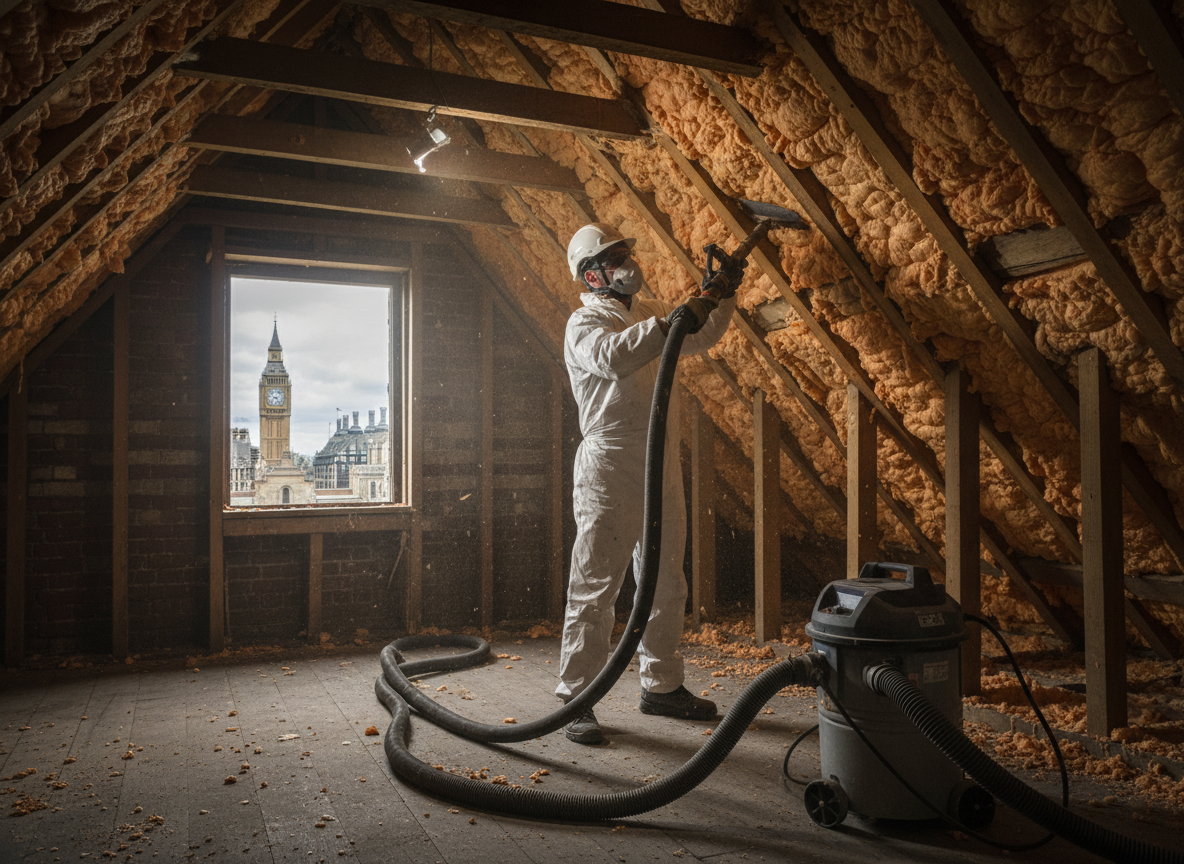
London's older terraces and semis, particularly those built before 1930 in areas like Kensington and Chelsea, frequently contain closed-cell spray foam applied directly to rafters and joists. This material bonds tightly to timber and brick, and removal requires careful mechanical separation to avoid damaging historic roof structures or releasing fibres into living spaces. Moisture trapped behind the foam is common due to the city's damp winters and limited roof ventilation, which can lead to rot if not addressed during extraction.
Edge cases arise in properties with shared party walls or converted lofts where foam has migrated into voids between neighbouring buildings. Technicians must map these connections before starting work to prevent structural compromise or disputes. Regulations around waste disposal of polyurethane foam also apply, requiring sealed bagging and licensed haulage rather than standard skip use. Homeowners often underestimate the dust and odour generated during removal, which can linger in poorly ventilated Georgian and Victorian interiors.
Weather patterns in the London area affect scheduling, as prolonged rain can saturate exposed roof timbers once foam is stripped. Crews therefore prioritise temporary weatherproofing on jobs in exposed locations such as Notting Hill or Fulham rooftops. Breathable membrane replacement is frequently discussed with clients to prevent recurrence of the original insulation issues.
Technician insight
In London, the thing that catches most people out with thermal spray foam removal is hidden moisture trapped against Victorian brickwork and rafters once the foam is stripped. The city's frequent damp winters mean that foam often masks rot that only appears during extraction, and many homeowners assume a simple peel will suffice without realising the timber needs drying time before any new insulation goes in.
Kensington Loft Extraction
A homeowner in a 1890s Kensington terrace reported musty smells in the loft. Inspection revealed closed-cell foam sealing in condensation against the rafters. The crew removed the foam layer by layer, ventilated the space, and confirmed no structural damage remained before handing back the property.
How it works
- 1
Site Assessment
Inspect loft or cavity spaces, identify foam type and depth, and check for hidden moisture or timber damage in the specific property.
- 2
Containment Setup
Seal off work areas with sheeting and negative air units to control dust migration through the building.
- 3
Foam Extraction
Use mechanical scrapers and vacuums to remove foam without gouging rafters or joists.
- 4
Cleanup and Ventilation
Remove all residue, bag waste for licensed disposal, and improve airflow to dry any damp timber.
Pricing
Cost varies with access difficulty, foam thickness, and property age; quotes provided after inspection.