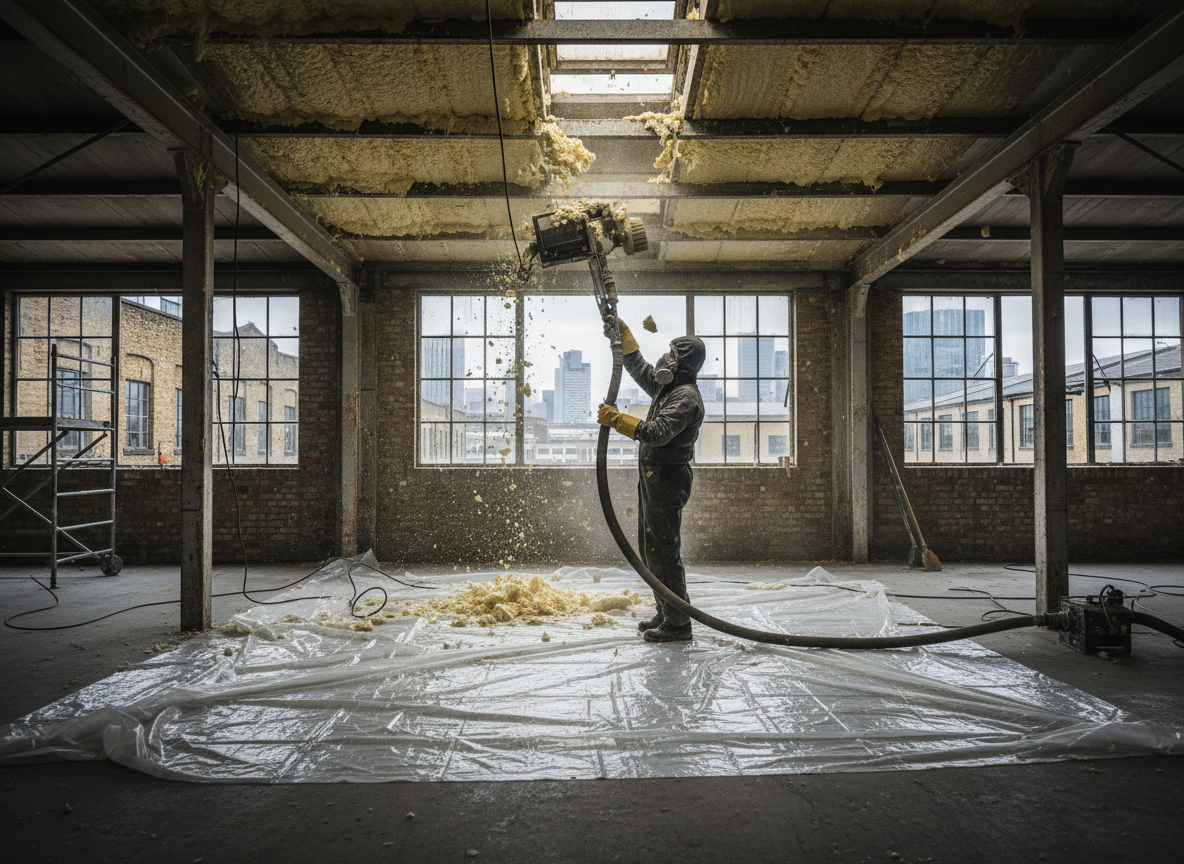
Warehouses in London often feature steel frames, corrugated metal roofs and concrete floors dating from the early twentieth century onward. Spray foam applied directly to these surfaces creates adhesion problems when removal begins because older metal can corrode underneath and the foam traps moisture from the city's frequent rainfall. Crews must first establish negative air pressure and seal off adjacent units to prevent dust migration into neighbouring properties along tight industrial estates in areas such as Park Royal or the Royal Docks.
Removal crews cut the foam in sections using oscillating tools rather than scraping, which reduces the risk of damaging underlying cladding that may still be serviceable. In Greater London, all waste must be transported under duty-of-care notes to licensed facilities; landfill tax and carrier registration add steps that residential jobs rarely encounter. Damp winters mean extra drying time after extraction, otherwise new insulation or coatings will fail quickly on residual moisture held in the brick or steel.
Edge cases include foam that has encapsulated electrical conduit or fire suppression pipework. These runs must be traced and protected before cutting starts. Older warehouses near the Thames often sit on made ground with limited access for large plant, so equipment is broken down and carried in by hand. Ventilation is critical because solvent vapours from certain foam types linger in enclosed spaces with poor natural airflow typical of London’s tightly packed industrial yards.
Technician insight
In London, the thing that catches most people out with Warehouse spray Foam removal is the way older corrugated iron roofs hold pockets of standing water beneath the foam, especially after the long wet winters typical around the Thames basin; if you don’t dry those channels properly before you leave, the next tenant gets mould blooming through any new lining within months.
Disused Printworks, Bermondsey
The warehouse had 150 mm of closed-cell foam stuck to a 1970s steel deck that had begun to rust. We found water trapped in the troughs and conduit running through the foam. After setting up full containment we cut the foam in strips, dried the deck with dehumidifiers for two days, then removed the residue and disposed of the waste under proper consignment notes.
How it works
- 1
Site Assessment
Measure foam depth and map hidden services using moisture meters and visual inspection of roof and wall junctions.
- 2
Containment Setup
Install poly barriers, negative air machines and floor protection to isolate the work zone from the rest of the warehouse.
- 3
Sectioned Removal
Cut foam into manageable panels with oscillating blades, bag immediately and lower via internal hoist or external scaffold.
- 4
Surface Cleaning and Disposal
Scrape residue, vacuum dust, then load sealed bags into registered vehicles for transport to licensed Greater London disposal sites.
Pricing
Cost depends on square metres, foam thickness, roof height and access restrictions; larger or multi-level warehouses require more labour and plant.